)
)
)
Session Recap: Digital Follow Underwriting: How the London Market Is Rewiring Follow Capacity
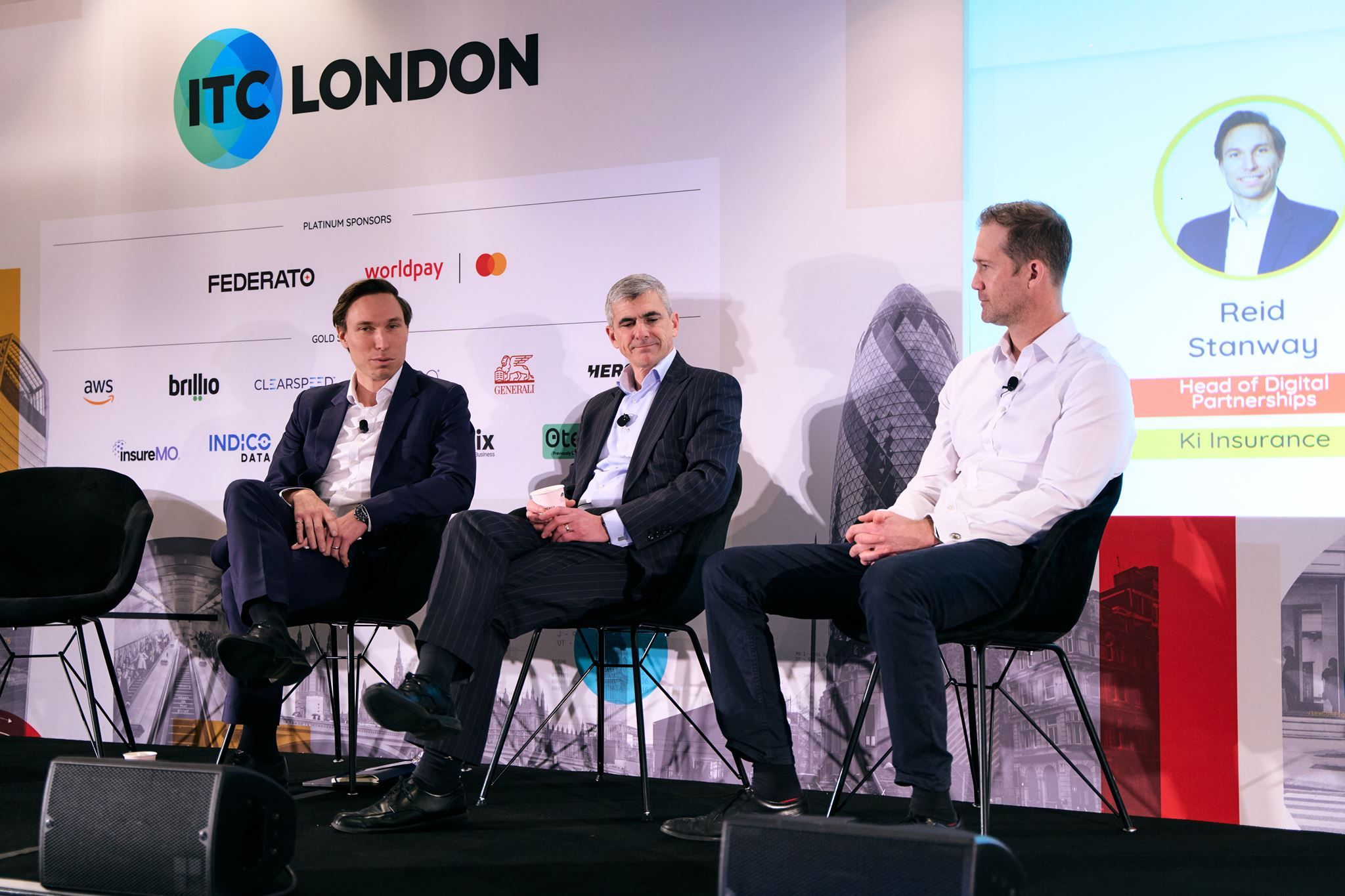
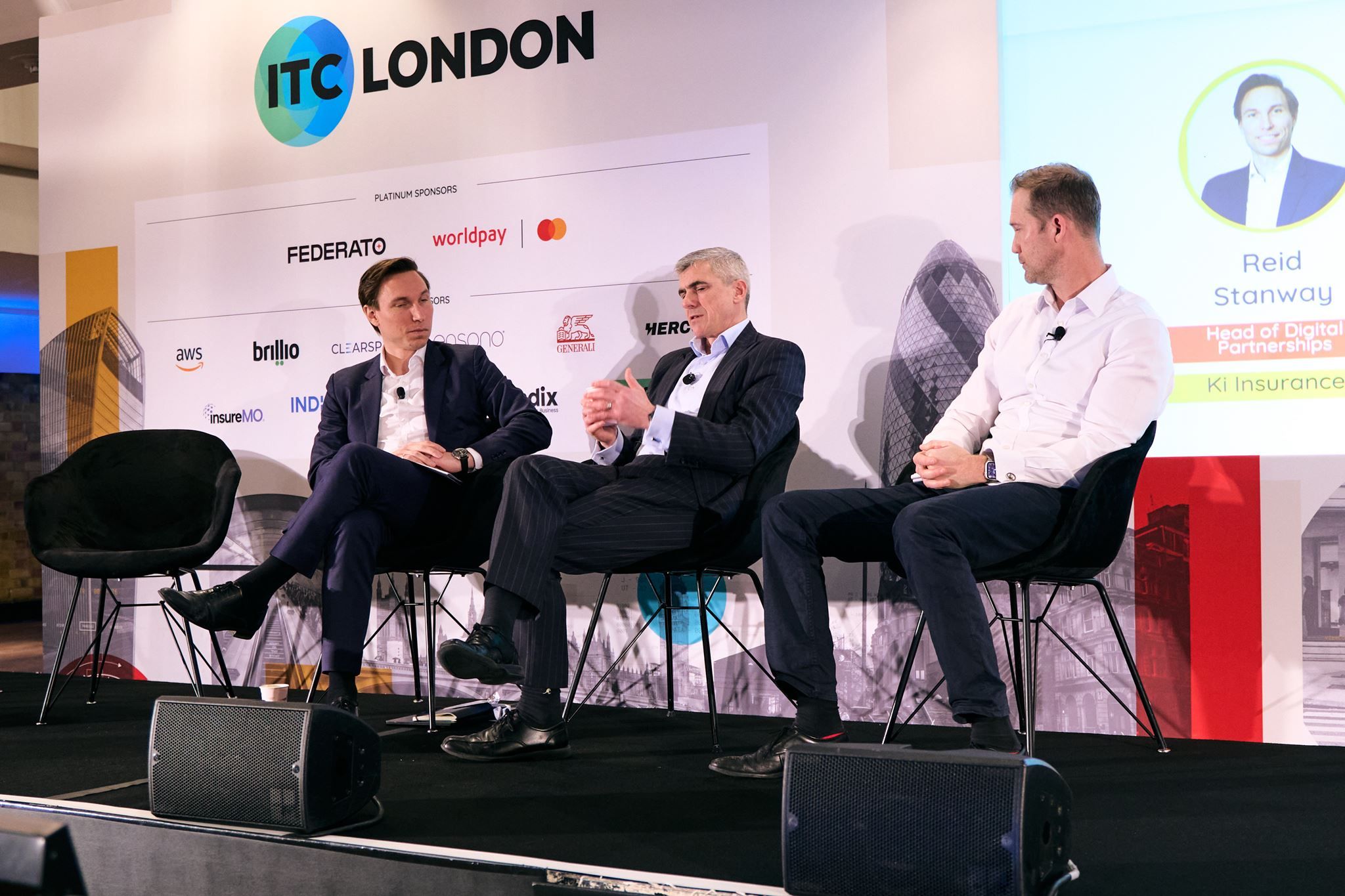
- Speakers:
- Dan Walsh, Chief Underwriting Officer, Ardonagh Specialty
- Trent Sommerville, Technology Director, Ardonagh Specialty
- Reid Stanway, Head of Digital Partnerships, Ki (moderator)
- Session date: 27 January 2026
- Estimated read time: 11 minutes
Quick read summary
- Digital follow now runs on two models: rules-based algorithmic capacity, and broker facilities that track the market rather than price it.
- The incentive has flipped. In the hard market brokers came to Ki's algorithmic platform for capacity; in a softening market they come for efficiency.
- Better data is solving the old indexation problem, so a facility can now prove it is tracking the business it promised.
- The soft market is the real test. Order into London is falling, and facilities built for growth must be built to last.
- AI is moving from sandbox to production, starting with turning spreadsheets and semi-structured documents into structured data.
Ten years ago, says Reid Stanway, Head of Digital Partnerships at Ki, there was barely any digital follow in the London Market. Follow business meant finding a lead, finding options and filling the order by hand. The few broker facilities that existed ran on delegated authority and a team of people turning the crank behind the scenes.
Today, he counts ten to twelve broker facilities in the London Market alone, and large swathes of follow capacity are being digitised. The panel's question was not whether that shift is real. It was whether it survives the next turn of the cycle.
What is digital follow underwriting?
 Digital follow underwriting is the automated deployment of follow capacity against a set of pre-agreed rules, so a follow line can be written at scale without a person reviewing each risk.
Dan Walsh, Chief Underwriting Officer at Ardonagh Specialty, separates it into two approaches. The first is algorithmic: a rules-based model in which the capacity provider sets its appetite by class of business, industry, occupancy, price, limits and attachment, then decides whether to deploy capacity and how much. The second is the broker facility, which runs on a much wider set of rules and does not price. Its aim, in his words, is to "track the market".
For Trent Sommerville, Technology Director at Ardonagh Specialty, the shift is that autofollow is data first. That moves follow business away from email and attachments, and opens new options in scoping, pricing and post-bind efficiency.
How did follow underwriting get here?
Stanway traces three phases. First, a manual follow market with a handful of barely digitised broker facilities. Second, roughly five years later, algorithmic underwriting: Ki used machine learning and claims loss history to support follow business, and scaled quickly in a hard market.
The third phase is now. A softening market has converged with technology that lets brokers build and scale digital facilities of their own. The Lloyd's Market Association has charted the growth of enhanced underwriting in The Growth of Enhanced Underwriting in the Lloyd's Market. Walsh's reading of the same trend is blunter: enhanced underwriting is growing, but broker facilities are growing massively. He names Aon Client Treaty, Marsh Fast Track and a follow facility of Ardonagh's own as examples.
That forced Ki to rethink its distribution. When capacity was scarce, brokers came to its platform for capacity. "The incentive and the driving factor has changed," Stanway said. Now they come for efficiency, so Ki has invested in APIs and in connections to placing platforms such as PPL and Whitespace, putting its open market algorithmic capacity alongside a broker's in-house fast follow.
Why do brokers now hold the advantage in digital follow?
Walsh made an observation from the exhibition floor. Most technology providers he spoke to named insurers, capacity providers and MGAs as their target market. Almost none named brokers, yet brokers control the distribution, and they are watching a digital transformation move very quickly while asking what the broker's value is and how to increase it.
The broker facility is part of the answer. It keeps distribution in the broker's hands, which is why Walsh describes the relationship with carriers as one of calibration: brokers control distribution, but they still need the capacity.
Brokers control distribution; carriers control capacity. Digital follow works only when both are calibrated to each other.
Can digital follow finally prove what it is tracking?
The historical weakness of broker facilities is indexation. Stanway illustrates it with a facility built on a book of 1,000 proposed risks. The underwriters backing it might expect to see 75 to 80 per cent of those risks come through. If far fewer arrive, the facility is not delivering what it promised.
Walsh frames it as an index fund. The London Market has made money through time, so a facility that genuinely tracks it should be profitable at scale and at low cost. If an investor handed a stockbroker $100 to track the London Stock Exchange and only $50 was invested, the investor would be upset. Capacity providers feel the same way about a facility that misses its index.
Better data is closing that gap. Walsh says the tools now show what sits within the scope being tracked, and show profitability by class, subclass, industry, occupancy, attachment point and limit, after a full hard market cycle. Culture remains the obstacle:
Fundamentally insurers love data, brokers hate data, right?
Sommerville calls data both the solution and the problem. The difference now is understanding: clients, brokers and markets are starting to talk the same language about what the data means.
Can digital follow underwriting survive a soft insurance market?
Stanway called this the contentious question. With ten to twelve broker facilities launched in the London Market and a soft market arriving, is this a growth phase that hits a wall?
Walsh's answer has two parts. First, the technology helps. Had the market stayed on the manual, inefficient model of four or five years ago, it would struggle more. Second, the pressure is real. Most core classes are softening significantly, domestic markets have more capacity, and less business is flowing into London. Walsh suspects many firms built their 2025 plans on 2024 and realised halfway through the year that things were not going to plan. The result is not only rate reduction but significant order reduction.
He reads that as a return to equilibrium for a market that has always had surplus capacity. The market has also been here before, ten years ago, and carries that experience. The defence this time is digitalisation, scale, culture and collaboration with carriers. Whether some of the newer facilities fail depends on the broking organisation behind them. Walsh's position is to grow them without burning them:
Let's make sure that they're longstanding sustainable capacity solutions.
Since the session, the field has grown again. Aon announced plans in May 2026 for a Digital Placement Exchange for London Market follow business, and in June 2026 Ardonagh, where Walsh and Sommerville work, launched Axiiem, a digital trading and capacity business for specialty insurance, according to Insurance Business.
How are brokers and carriers collaborating in practice?
For Sommerville, the answer is integration:
There's no greater collaboration in the digital space than an integration, right?
He expects email and attachments to disappear from follow business before anywhere else.
Ki is one example of how this works. When it sits on a broker's facility as a capacity provider, it can offer technology and work transfer tools to help the broker build its own digital follow solution. Sometimes that means running Ki's platform as a service with the broker's rules embedded inside it. Sometimes it means APIs. Stanway says integrations that were painful seven or eight years ago are now far easier, and expects more carriers to offer technology alongside capacity.
Walsh judges the model by a single test: "It has to be a win for the client. It has to be a win for the carrier and it has to be win for the broking unit."
A cautious carrier, an ambitious broker and a client looking for the best deal will not all be happy all the time. The aim is to keep most of them happy most of the time, and to give clients and carriers more certainty about the capacity being deployed.
The budget case is also shifting. In current conditions, Sommerville says, growing the top line is hard, which puts more focus on the bottom line. Anything offering straight-through processing now draws far more willingness to invest.
Where does AI take digital follow next?
Sommerville sees the market moving out of the sandbox. Almost every firm had a proof of concept; the first are now reaching production. The strongest early results come from turning semi-structured data, much of it in Excel, into structured data wherever it has caused friction in the chain. "The AI genie is not going back in the bottle," he said.
Adoption will take longer than Wall Street seems to think, he says, because the harder barrier is data governance, compliance and legal sign-off, all new to everyone involved. Stanway adds a second risk: wrapping old core systems in new AI layers looks neat in a pilot but behaves differently with real users, where latency and other issues appear. Sommerville flags a third. It has never been easier to build these products, so the market may see a wave of autofollow solutions simply because they are attainable.
Asked for the biggest challenge, Walsh answered "Culture. Culture. Culture." He adds a sharper point for brokers. If they hate data, they also hate risk, and taking on delegated authority wrapped around an AI-driven digital process means taking on potentially large E&O exposure.
The technology is ready before the governance is. Legal, compliance and E&O sign-off now set the pace.
What happens to brokers and underwriters?
All three speakers see the same upside. Walsh wants people freed from being keyboard warriors entering data by hand, and focused instead on how to build a portfolio at scale: what works, which capacity, which niches and which rules. Sommerville expects more time with clients and on market advocacy, and less time typing, rekeying and producing documents.
Stanway goes further. He expects brokers and underwriters to query a slip the way many already use general AI tools: drop it in, ask questions, check whether follow capacity exists and interpret the answer. Remembering his own years in broking, spent more on paperwork than with clients, he sees that shift as the prize:
The fact that they can now go do more with the clients is a pretty exciting concept.
What should firms check before backing a digital follow facility?
- Indexation. Confirm what share of the proposed book the facility is actually seeing, and how often that is reported.
- Profitability by segment. Ask for performance by class, subclass, industry, occupancy, attachment and limit, not one blended figure.
- Integration route. Agree whether capacity connects by API, through a placing platform or as an embedded platform service.
- Governance before launch. Settle data governance, compliance, legal sign-off and E&O responsibilities before the facility goes live.
- Sustainability through the cycle. Test the facility against falling rates and falling order into London, not just a growth case.
What this means for London Market leaders
- Brokers: A digital facility protects control of distribution, but Walsh calls the shift to a data culture an educational drive that is still under way.
- Carriers and capacity providers: Efficiency now wins the broker relationship. Offering technology and integration alongside capacity is becoming part of the proposition.
- MGAs and delegated authority teams: Wrapping delegated authority around AI changes the risk profile. E&O and governance belong in the business case from the start.
- Technology leaders: Investment now follows straight-through processing. The fastest wins are in structuring the semi-structured data already moving through the chain.
Frequently asked questions
- What is the difference between algorithmic follow and a broker facility? Algorithmic follow is a rules-based model where the capacity provider sets its appetite by class, industry, occupancy, price, limits and attachment, and decides how much to deploy on each risk. A broker facility uses a much wider set of rules, does not price, and aims to track the market.
- What is indexation in a broker facility? Indexation is how closely the business flowing through a facility matches the book of risks it was built on. If underwriters back a facility expecting 75 to 80 per cent of a proposed book and see far less, the facility is missing its index.
- Why are broker facilities growing so quickly? A softening market has coincided with technology that makes it easier for brokers to build and digitise facilities. Brokers control distribution, and a digital facility lets them add value across the chain.
- Where is AI having the most impact on follow underwriting? According to Trent Sommerville of Ardonagh Specialty, the earliest production results are in turning semi-structured data, much of it in Excel, into structured data. The main barriers are governance, compliance and legal approval rather than the technology.
- Can digital follow underwriting survive a soft insurance market? Dan Walsh of Ardonagh Specialty told ITC London that the technology will help, because a manual model would struggle more as rates fall and less business flows into London. He reads the softening as a return to equilibrium, and argues that facilities must be built as long-standing, sustainable capacity solutions rather than burnt in the race for growth.
Conclusion
In London Market insurance, digital follow underwriting has moved from experiment to infrastructure in a decade. Algorithmic follow scaled in a hard market; the broker facility is now multiplying in a soft one. The technology to price, track and integrate follow capacity is in place, and better data is answering the indexation question.
What will separate the facilities that last from those that do not is the discipline behind them: governance settled before launch, carriers and brokers calibrated to each other, and growth that does not burn the capacity it depends on. The London Market has seen a soft cycle test new follow models before. This time it has the data to see the test coming.
About our speakers
Dan Walsh
Chief Underwriting Officer, Ardonagh Specialty
Walsh spent 25 years in underwriting before moving to the broking side, including nine years at Aon running its broker facilities, and now leads underwriting at Ardonagh Specialty, where his work centres on broker facilities.
Trent Sommerville
Technology Director, Ardonagh Specialty
Trent is a a technology and AI leader focused on shaping digital platforms that drive scale, resilience, and competitive advantage. with more than 25 years’ experience.
Reid Stanway
Head of Digital Partnerships, Ki
Stanway works with brokers to integrate Ki's algorithmic follow capacity into their digital placement strategies. His earlier roles include Digital Placement Leader at Marsh and Chief Digital Officer of Verisk Specialty Business Solutions. He moderated this session.
Based on a session delivered at ITC London 2026. Edited from the original transcript for clarity, structure and long-term reader value.
The next edition of ITC London is here. Registration for ITC London 2027 is now open. Secure your place, connect with the people shaping the industry, and be part of the conversation this time.