


Why Insurance Legacy Systems Are the Real Reason AI Underdelivers
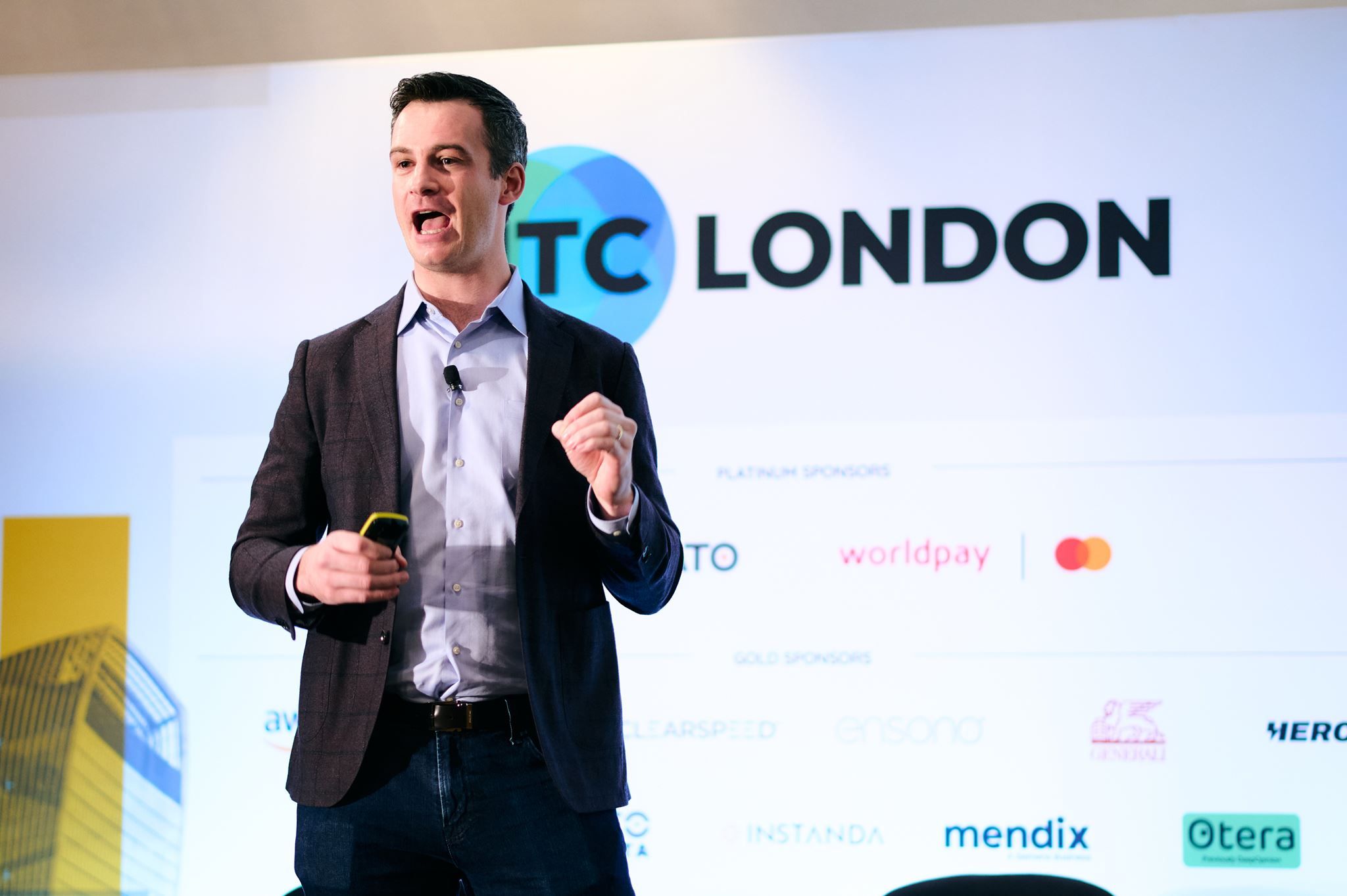
- Speaker: William Ross, CEO and Co-Founder, Federato
- Session date: 26 January 2026
- Estimated read time: 9 minutes
Quick read summary
- Insurance legacy systems, not the AI models bolted on to them, are the reason AI budgets keep rising while returns stay flat.
- Nearly half of insurers lost money on core underwriting in 2025, so the canvas AI is being painted on is already broken.
- Eight vendors averaging 36 years old take over 80 per cent of core technology and services spend, and their APIs wrap monoliths.
- William Ross argues for cutting deeper into core systems and the full policy lifecycle rather than stapling AI to the surface.
- Before the next AI budget line, ask how many minutes the core takes to answer an underwriter.
Seventy four per cent of chief executives report no change in revenue from AI, and 88 per cent of the same group report increased spend on it. William Ross, CEO and co-founder of Federato, put those two figures on screen within four minutes of starting his ITC London keynote. Companies are paying more for AI and reporting no change in revenue.
AI in insurance has its own version of that problem. In Ross's telling, it has little to do with the models. He runs an AI-native underwriting platform vendor, so he has a stake in that view. The industry's AI ambitions are being built on insurance legacy systems designed decades before the current wave of AI. His 15 minute keynote, What got us here won't get us there, argued that the safe option, bolting new capability on to the old core, is also the option that drags insurers downhill.
Nearly half of insurers are losing money on underwriting
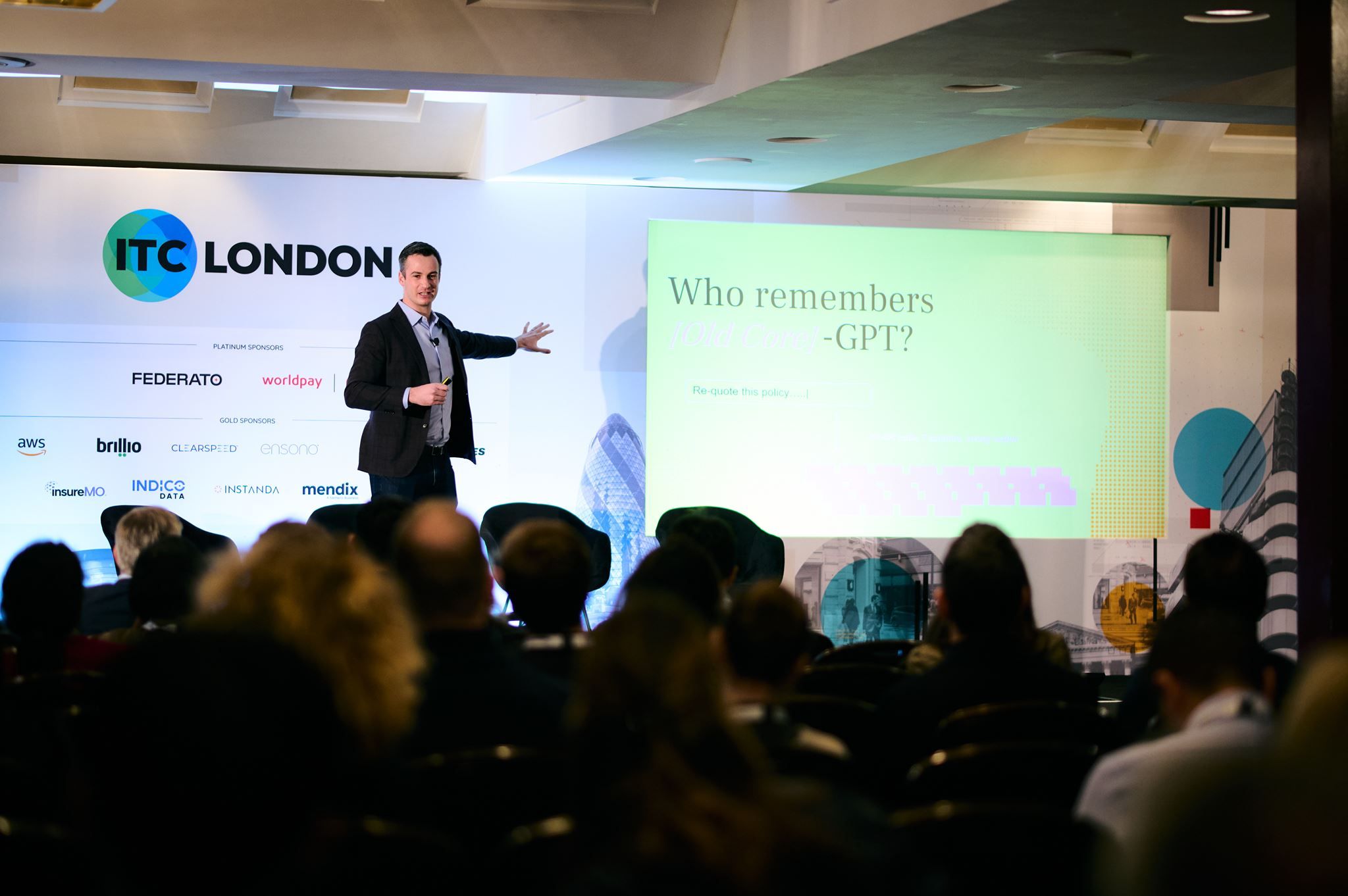 The starting point is underwriting profitability, not technology. Ross cited figures he attributed to ACORD showing that 48 per cent of insurers destroyed value in 2025, meaning they lost money from core underwriting operations on an aggregate basis. The same study in 2021 put the figure at nine per cent.
“This isn't a tech company trying to drive innovation”, he said of the source, and admitted the number felt off to him until he saw the 2021 comparison. The study calls the result hollow value: without investment income, almost half the market could not generate a return from the thing it exists to do.
If an insurer is making the returns any pool of capital could make, and the underwriting is hurting rather than helping, why is insurance the right place to park that capital? Ross's answer applied to the aggregate, not to any individual's judgement: “We are less performant than we think we are.” For anyone planning an AI programme, that means there is no clean baseline to improve, which is the point of the image Ross reached for, a future drawn on an already broken canvas: automation on top of a loss-making underwriting operation inherits its economics.
On figures Ross attributed to ACORD, 48 per cent of insurers destroyed value from core underwriting in 2025, against nine per cent in 2021.
Why did the cloud stall in insurance where the web did not?
Ross's explanation concerns who decides. Executives make the decisions, and if they cannot see the value for themselves the change is less likely to happen. The last time insurance systems genuinely turned over was the early 2000s, when the web arrived and leaders could intuit from their own lives what ought to be possible at work. The move to the cloud a decade ago offered no such experience. A business case could be written, but nobody could feel it.
Let's be honest, insurance did not capture the move to the cloud the way other industries did.
AI is different again, and that is why Ross calls 2026 a tipping point. Executives in every industry now believe they can see why things are changing, because they use the tools themselves. The willingness to decide has returned. The foundation those decisions land on has not changed.
What is actually broken underneath insurance core systems?
Ross called that foundation the crumbling old core. Over 80 per cent of core technology and services spend in insurance globally goes to a group of eight companies. On average they are 36 years old, some are 50, and they have been assembled through more than 90 acquisitions.
The consequence shows up the moment an insurer tries to do something agentic. Ross described an unnamed core vendor announcing a ChatGPT style interface that would let an underwriter re-rate a policy from a message. Behind the chat box, re-rating a single policy on that architecture can require as many as 28 API calls.
The APIs that exist are a wrapper, a facade that sits around a monolith architecture.
That is an argument about expectations, not against integration, which Ross said still has to be used. An underwriter is a consumer like anyone else, and no consumer is happy with an answer that comes back seven minutes later. If that is the latency the old core imposes, the AI layer on top cannot fix it.
Over 80 per cent of core technology and services spend in insurance goes to eight vendors averaging 36 years old, assembled through more than 90 acquisitions.
AI bolted on to insurance legacy systems is a plaster on an infection
Ross's image for the standard response was a teddy bear with its ear fallen off. The instinct is to staple it back on, to bolt one small thing on to the process because that feels like the safe choice. His sharper version was medical: the industry has an infection on its arm and is reaching for a plaster.
Nobody is suggesting amputation, he said. The argument is that insurers may need to cut deeper than a plaster, because two things are now beyond dispute: few people believe the technological underpinnings of insurance are in a good place, and the underwriting figures show the operational proficiency is not either.
Five questions to ask before the next AI budget line
Ross closed with two challenges to the room, which break into the first three questions below. The detail of his talk supplies two more.
- Lifecycle: Are you looking broadly enough at the full insurance policy lifecycle, or automating one step in it?
- Systems: Have you examined the underlying systems the AI will depend on, not just the model?
- Vendor approach: Are the companies you work with coming at this from an AI-native approach, or retrofitting AI on to an older platform? Ross sells an AI-native platform, so weigh his answer to this one accordingly.
- Latency: How long does the core take to return a re-rate or a quote? If it is minutes, no underwriter will use the interface.
- Implementation horizon: Is the plan built on the old assumption of a five year implementation? One leader Ross quoted feared being a dinosaur by the time such a project finished.
Is the appetite for change real, or just conference talk?
 Ross argued it is real. One of the most conservative senior leaders in Federato's portfolio recently made a sweeping gesture and told him to “bring on the robots”. Public figures now talk of 85 per cent of underwriting and claims processes being fully automated, a claim Ross accepted might also be cover for the next round of redundancies.
He also quoted speakers from earlier that morning at ITC London: do not invest in what is becoming obsolete, be bolder, stop making excuses.
Frequently asked questions
- Why do insurance legacy systems limit what AI can deliver? Insurance legacy systems were built as monoliths and later wrapped in APIs, so re-rating a policy can need as many as 28 separate calls and take minutes. AI layered on top inherits that latency. William Ross of Federato argues this, not the quality of the models, explains why AI spend rises while returns stay flat.
- How many insurers are losing money on underwriting? Figures William Ross attributed to ACORD show that 48 per cent of insurers destroyed value from core underwriting operations in 2025, compared with nine per cent in 2021. Destroying value means losing money on underwriting on an aggregate basis, before investment income.
- Is replacing an insurance core system the only option? No. William Ross said nobody is proposing amputation, and incumbent vendors' integration work still has to be used. His argument is that insurers should cut deeper than a bolt-on fix, assess the full policy lifecycle and the systems beneath it, and judge vendors on whether they are AI-native or retrofitted.
- What is a core insurance system, and why does it matter for AI? A core insurance system is the platform an insurer rates, binds and administers policies on. William Ross's figures put over 80 per cent of core technology and services spend with eight vendors averaging 36 years old, whose APIs wrap a monolith architecture. That is why re-rating one policy can take 28 calls and minutes.
Cut deeper, or keep stapling the ear back on
The sharpest point in Ross's keynote was not about AI at all. It was that the industry's technological and operational foundations are both, by common consent, in a poor state, and most AI investment is made as if neither were true. In insurance, much of that rising spend on AI underwriting tools is buying faster interfaces to a core that may need 28 calls to re-rate one policy.
What changes next is the decision itself. For the first time since the web, the people who sign off technology budgets can experience the new tools in their own lives, and that is why 2026 is a tipping point rather than another year of pilots. The willingness to act has arrived before the foundation to act on.
The useful discipline for a chief underwriting officer or a head of transformation is simple to state and uncomfortable to do: before approving the next AI line, find out how many calls and how many minutes stand between an underwriter asking a question and the core answering it. If the honest answer is 28 and seven, the plaster will not hold, and in Ross's image the industry cannot draw a future on an already broken canvas. To follow the sessions and speakers shaping the London Market, register your interest in ITC London 2027, or get in touch about partnership opportunities.
About our speaker
William Ross
CEO and Co-Founder, Federato
Ross trained as an AI researcher and has worked in insurance technology for almost a decade. Before co-founding Federato, an AI-native underwriting platform for property and casualty insurers, he worked in IBM's Watson Group and taught Udacity's AI for Business Leaders programme. He holds an MS and an MBA from Stanford University.
Further reading
Based on a session delivered at ITC London 2026. Edited from the original transcript for clarity, structure and long-term reader value.
The next edition of ITC London is here. Registration for ITC London 2027 is now open. Secure your place, connect with the people shaping the industry, and be part of the conversation this time.