)
)
)
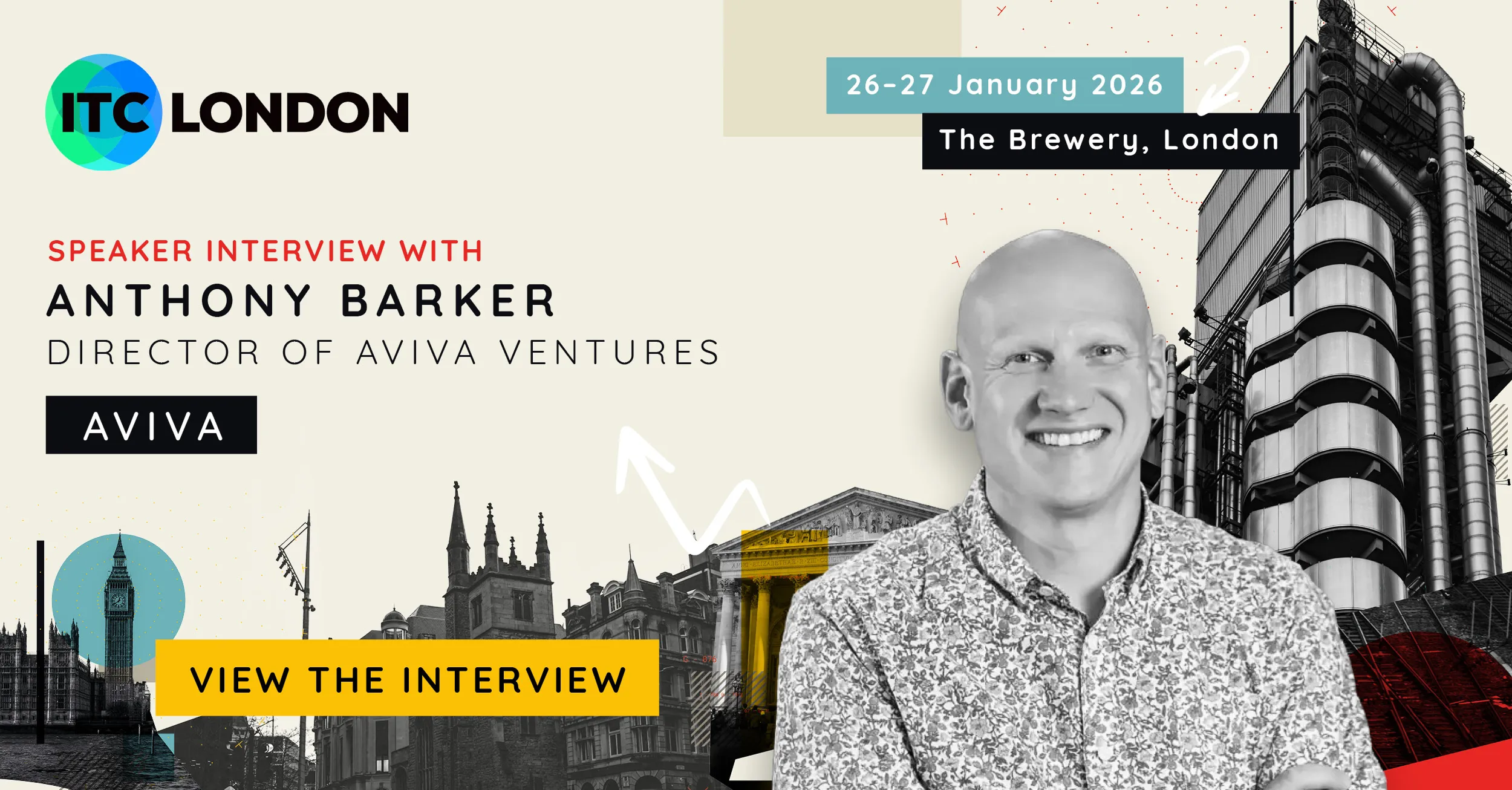
ITC London 2026 Speaker Interview: Anthony Barker, Director at Aviva
What has been the most defining moment of your career?
I’ve been with Aviva for nearly two decades, and the most pivotal moment came about ten years ago when I joined Aviva’s corporate venture capital arm just as it was being set-up. That was a real inflection point for me.
I transitioned from traditional finance roles into a new part of the business, and into early-stage investing, which opened up a completely new world of innovation and entrepreneurship.
Today, I lead Aviva Investors’ Venture & Growth Capital strategy, investing in businesses that are shaping customer and technology trends and that have the potential to transform industries and create long-term value for Aviva and our customers.
What’s one lesson from outside of the insurance and financial services industry that has shaped the way you work?
Working with early-stage companies across a range of industries has taught me the power of agility and resourcefulness. Start-ups often operate with limited resources, yet they achieve incredible progress by moving fast and staying focused.
Working with these companies across Aviva also helps us to adopt that mindset - we can learn from start-ups who have new & innovative ideas, and as a large Financial Services company, we also have expertise spread across a number of key functions that can help support a start-up’s journey and accelerate their growth. This is a win-win.
What’s a misconception about the insurance industry you’d like to change?
One of the biggest misconceptions is that large incumbents don’t innovate. In reality, innovation is at the heart of what we do. Through Aviva Ventures, we invest in technologies and propositions that can transform customer experiences and future-proof our business.
We’re not just investing externally—we’re also innovating internally. Our teams are constantly exploring emerging technologies and developing new solutions to meet evolving customer needs. Far from being slow-moving, I’ve seen firsthand how forward-thinking and adaptive this industry can be.
Do you think some misconceptions stem from the fact that the insurance and financial services industry is highly regulated?
Start-ups and insurers operate from very different starting points. For a start-up, speed is everything, while for an incumbents regulation is a critical part of our industry because it ensures customer protection and trust.
The key is striking the right balance: maintaining the speed and entrepreneurial spirit of a start-up while ensuring we meet the standards and responsibilities of a regulated financial institution.
Part of our role in Aviva Ventures is to help bridge that gap and enable early-stage companies to work with business units in Aviva to bring cutting-edge technology to market in a way that’s safe, secure, and aligned with regulatory requirements.
What do you view as the biggest challenge in the insurance industry?
There are multiple challenges from climate change to cyber threats and many of these are connected, but to pull out one specifically which I think is both a challenge, but also one of the biggest opportunities, it would have to be the rapid evolution of technology, particularly AI and GenAI.
These technologies have the potential to transform everything from operational efficiency to customer experience, but the industry needs to adopt AI responsibly: identifying the right use cases, implementing them in a controlled way, and ensuring we maintain trust and transparency.
It’s a seismic shift, and we need to manage it carefully while embracing the opportunities it brings.
What innovations do you foresee in the insurance industry in the next few years?
I suspect more & more connected data along with continued advances in AI is going to provide great opportunities for the industry across most areas from how we process data, to how interact with customers, and how we deliver services and create more personalised experiences.
But I expect we’ll also continue to see advancements in areas like embedded insurance, digital health, and climate-related risk solutions. The next few years will be about integrating these technologies into the core of the industry in a way that creates real value for customers.
That is why I am passionate about working with entrepreneurs and early-stage businesses – it provides a real channel for innovation and to help incumbents like us accelerate our strategy.
Do you foresee changes in the customer’s perspective of AI implementation in the insurance and financial services industry?
Yes, customer expectations are continuing to evolve rapidly. People increasingly expect personalised, real-time experiences, and they’ll look to insurers to deliver that.
At the same time, customers will want reassurance that technology is being used responsibly, and I suspect the majority will still prefer a level of human involvement for some time to come – especially during complex interactions.
Trust will be critical and the perception of new technology should improve with real-world positive outcomes, and so as an industry, we need to be transparent about how we use AI and ensure that it enhances — not compromises — the customer experience.
If this article gets you thinking, continue the conversation at ITC London 2027, taking place on 25–26 January at The Brewery, London.
Interested in sharing your expertise on stage?