


The Future of Insurance Depends on What AI Is Asked to Optimise
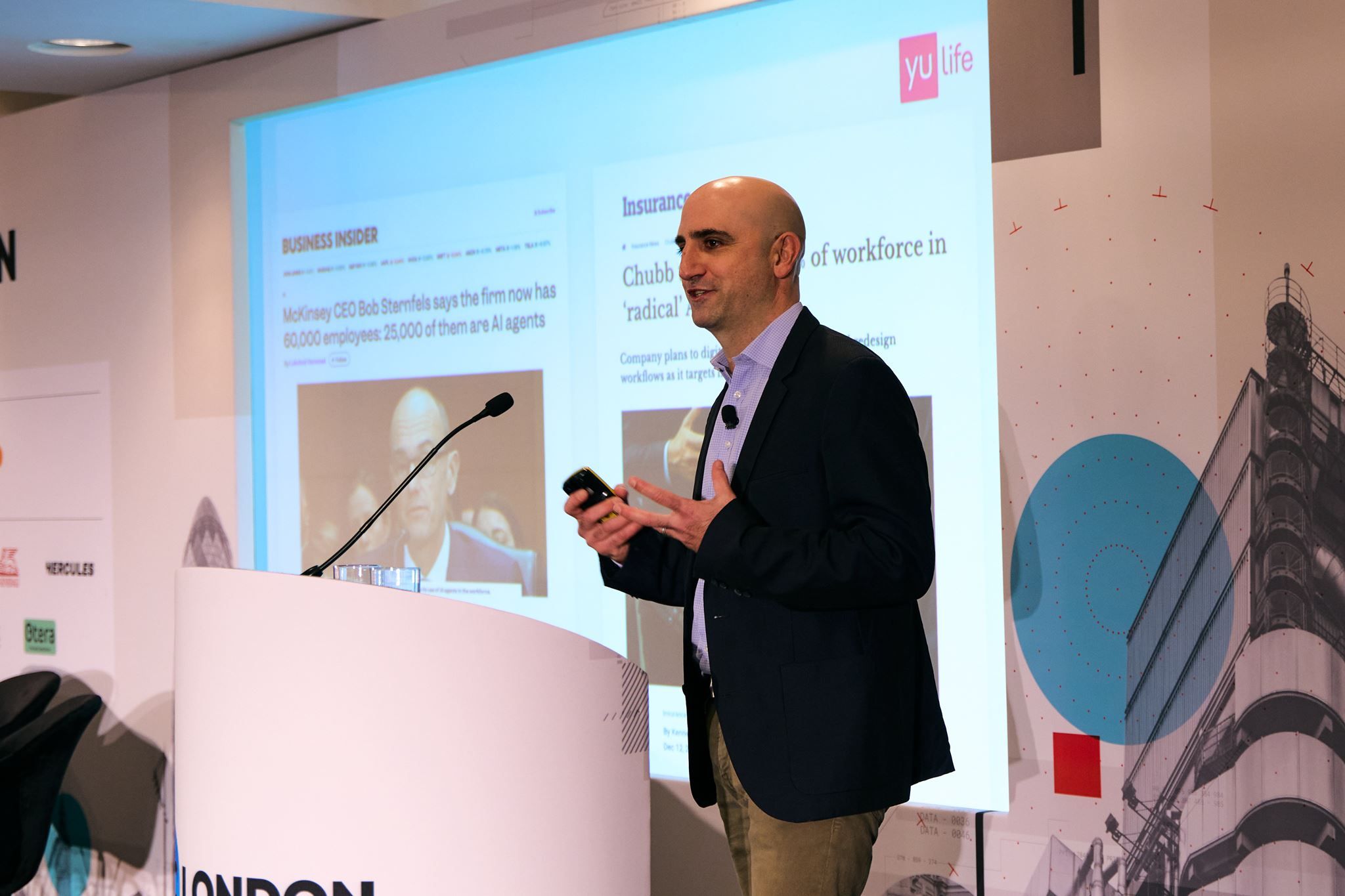
- Speaker: Tal Gilbert, CEO, YuLife
- Session date: 27 January 2026
- Estimated read time: 9 minutes
Quick read summary
- The future of insurance depends on the goals and data insurers give AI, not on which model they choose, according to Tal Gilbert of YuLife.
- Most insurers are using AI to automate existing workflows and cut cost, which Gilbert calls logical but risky on its own.
- White-collar work is changing fast, and past shifts in how people work created whole product lines such as group life cover.
- Gilbert wants insurers to feed AI dynamic, everyday signals about health and work, so they can act before a claim rather than after it.
- Review your AI plan this quarter: if every initiative automates today’s model, Gilbert’s warning about replaceability applies to you.
The future of insurance will be shaped less by which AI models insurers buy than by what they point them at. Tal Gilbert, CEO of YuLife, argues that an industry using AI only to automate today’s processes is making itself easier to replace, and that the larger prize is using everyday data to keep people healthy and in work before a claim is made.
Midway through his ITC London keynote, Tal Gilbert, CEO of YuLife, owned up to a cheeky experiment. His team had fed every word of the conference brochure into an AI model and asked it what the audience cared about. The answer came back as workflows, automation, efficiency and, ultimately, cutting cost.
He did not call that answer wrong. It matched his conversations with hundreds of investors, operators and startups, who see automation as the low-risk place to unlock value first. His concern was what the future of insurance looks like if efficiency is the only thing the industry asks AI to deliver.
What is the insurance industry actually using AI for?
Insurers are mostly using AI to do what they already do, faster and more cheaply.
Gilbert pointed to signals from both outside and inside the sector. McKinsey chief executive Bob Sternfels, he said, has described 25,000 AI agents working inside the firm, with the ratio of agents to people heading towards 50/50. Closer to home, he cited Chubb’s announcement late in 2025 that it would cut up to 20 per cent of its workforce over three to four years as part of its AI drive.
The data being fed to these systems tells the same story. According to Gilbert, the big carriers are concentrating on organising the data they already hold, a large programme attracting millions in consulting spend. That data is mostly static, captured at the point of sale and well structured, which is exactly what actuaries know and trust.
Gilbert framed the problem through how the models work. As computing power grows, he argued, little separates one large language model from another beyond the goals it optimises for and the context it receives. He cited the constitution Anthropic has published for its Claude models as a sign of how seriously model builders treat the values question.
Two things separate one AI model from another, Gilbert argued: the values it is told to optimise for and the context it is fed.
None of this makes current AI in insurance irrational. Few boards would turn down cheaper, faster and more consistent processes with compliance documentation produced automatically. Gilbert’s question was what happens when that is the whole strategy.
Whatever can be automated can be replaced
An automation-only strategy leaves insurers exposed twice over, in Gilbert’s view. It misses the changing risk in the workforce and the wider population. It also leaves people in the industry, and the industry itself, vulnerable, because anything that can be automated can also be replaced.
The question really is what if that’s the only thing you do? So if you only automate our current processes and our current models, where does that leave you?
For a senior team, that turns insurance automation from a finished strategy into a baseline. Efficiency gains are open to any competitor, new entrant or technology firm with access to the same models. Gilbert’s view is that “building the future and creating the products of the future is a much harder thing for technology to do”, and that is where defensible value sits.
An AI programme that only automates today’s processes produces gains any competitor with the same models can match.
Has employee benefits insurance faced a shift like this before?
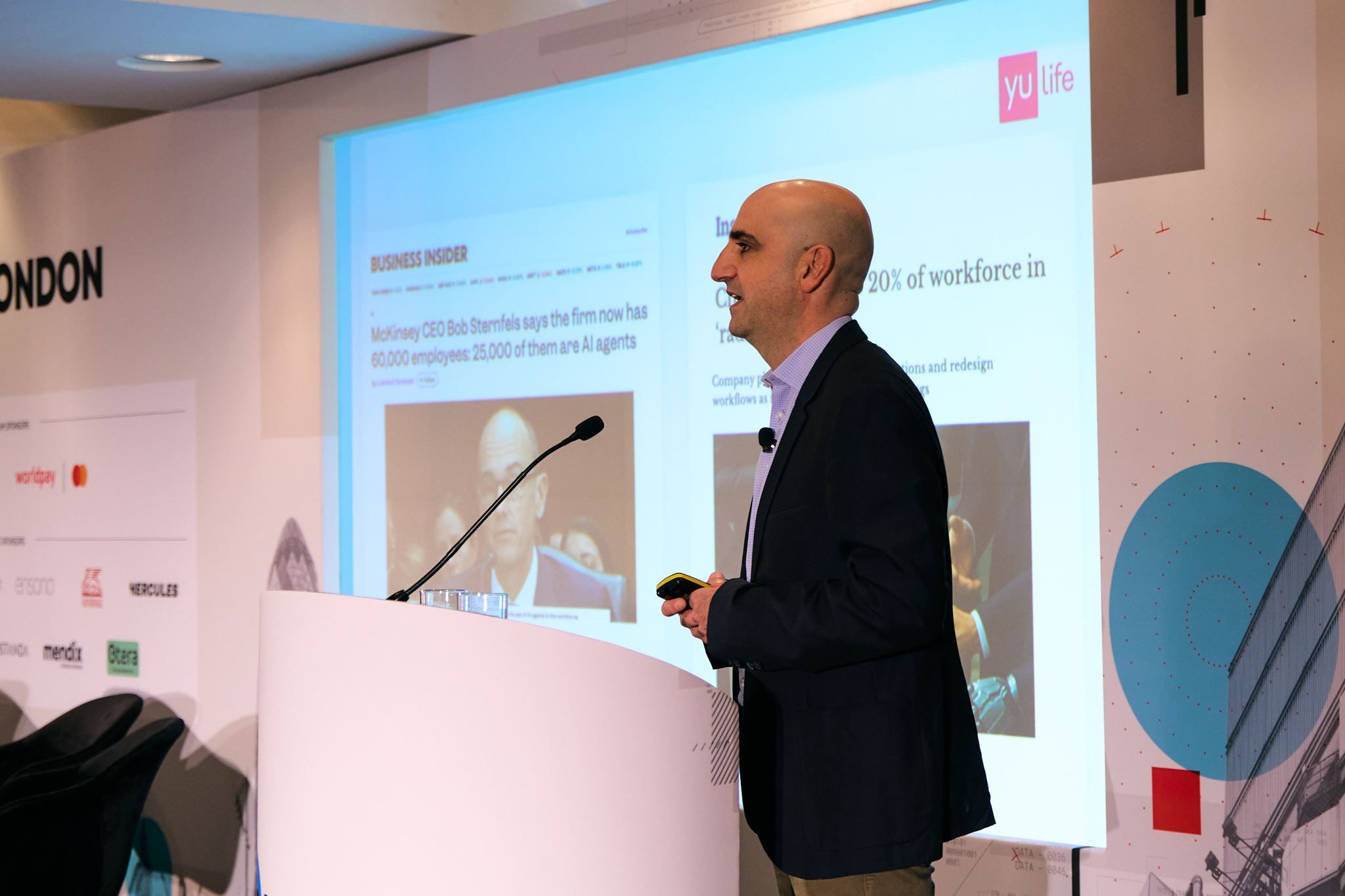 It has, and more than once. Gilbert has spent his career where health insurance, life insurance and wellness meet. He traced the pattern from fields to factories, to the offices of the 1960s and on to digital and remote workplaces. Each shift changed the risks people carried at work, and the industry responded with new products.
Workers’ compensation and group life both emerged in the early 20th century, as physical risks at work multiplied and families needed cover if someone was injured or killed on the job. After the Second World War, employer-sponsored health insurance had its biggest growth spurt in the US because wage caps stopped companies competing on pay, so they competed on benefits instead.
White-collar work, Gilbert believes, has reached a similar inflection point. For group risk insurance providers, the precedent shows the sector has adapted proactively before, and that defining products are often born in these moments.
What does a family photograph reveal about AI and context?
It shows that the models can read context far richer than any proposal form. Gilbert gave Google’s Gemini a real photograph of a family at home, and it picked out details down to a child’s coloured blocks. Asked to interpret the image, Gemini called it “a representation of the quiet moments that insurance brands aim to protect and enhance”.
For Gilbert, that is the context insurers should feed their models: people’s lives, not only the fields captured when a policy is sold.
How would preventative insurance use everyday data?
Preventative insurance would use dynamic signals from daily life to spot risk and act before it becomes a claim. YuLife’s version is an intelligence layer called Yunity. Gilbert described it as taking frequently changing, often unstructured data points from everyday life and mapping them onto the risk and actuarial models insurers already use.
The output runs in three directions. Individuals get guidance on health and financial decisions, the employer sees how its benefits spend is actually used in real time, and the insurer gets intelligence for pricing and product development. Gilbert said the same signals can warn employers early about stress and burnout risk, so they can intervene before a claim.
Which path is your AI programme on?
Most programmes sit in the left-hand column today, and Gilbert accepted that efficiency matters. The right-hand column is where he argued long-term value sits.
| Automation only | Automation plus context | |
|---|---|---|
| What the AI optimises for | Speed, cost and consistency | Customers’ health and financial outcomes |
| Data it is fed | Static, structured, captured at point of sale | Dynamic, often unstructured signals from daily life |
| When the insurer acts | When the claim arrives | Before a claim, through early warning |
| What the employer sees | Little of how benefits are used | How benefits spend is used in real time |
| Exposure | Easy to replicate with the same models | Harder for technology alone to build |
FAQ
- How is AI used in insurance today? According to Tal Gilbert, CEO of YuLife, most insurers use AI to automate existing workflows, improve efficiency and cut cost. The largest carriers are also spending heavily on organising the static, structured data they already capture at the point of sale. Gilbert regards this as a logical first step but not a complete strategy.
- Why is an automation-only AI strategy risky for insurers? An insurer that only automates its current processes and models produces gains that competitors with the same AI tools can copy. Gilbert argued this leaves people in the industry, and the industry itself, vulnerable, because anything that can be automated can be replaced. It also misses the changing risks in the workforce and the population.
- Which data could help insurers prevent claims rather than pay them? Gilbert pointed to dynamic, often unstructured signals from everyday life, such as engagement with health guidance and how employees actually use their benefits. Mapped onto traditional actuarial models, these signals can flag stress and burnout risk early enough for an employer to intervene before a claim.
What the brochure test says about the future of insurance
When an AI model read the ITC London brochure, it concluded that this industry cares about workflows, automation and cost. Gilbert did not dispute the finding. He used it to show what the industry is currently telling its most powerful technology to optimise for, and what it is leaving out.
Well, I believe we really have a choice. And not just a choice. I think if anything, we have a responsibility.
That responsibility is commercial as well as moral. If better health and financial outcomes are good for customers, Gilbert argued, they are good for the carrier and the risk bearer too. An insurer that points AI at those outcomes builds products that are hard to copy.
The precedent is on the industry’s side. The sector that built group life and workers’ compensation around the risks of the factory floor now has to decide what it builds around the risks of the screen. An industry whose own brochure reads to an AI as a list of ways to cut cost has already told the machines what to optimise for. Gilbert’s keynote was a case for changing that instruction while there is still time.
About our speaker
Tal Gilbert
CEO, YuLife
Tal Gilbert became CEO of YuLife in January 2026, succeeding founder Sammy Rubin, who became executive chair. He brings more than 20 years of leadership across insurance, employee benefits and digital health. His previous roles include CEO of Vitality US, acting CEO of AIA Vitality in Hong Kong and general manager of Vitality Health International. He studied statistics and actuarial science at the University of the Witwatersrand, completed his actuarial qualifications in the UK and has built his career on engagement-led, data-driven insurance models.
Further reading
- Why insurance legacy systems are the real reason AI underdelivers
- ITC London for insurers and reinsurers
- Why attend ITC London
Based on a session delivered at ITC London 2026. Edited from the original transcript for clarity, structure and long-term reader value.
The next edition of ITC London is here. Registration for ITC London 2027 is now open. Secure your place, connect with the people shaping the industry, and be part of the conversation this time.