)
)
)
How Insurance Customer Experience Is Won or Lost in Claims
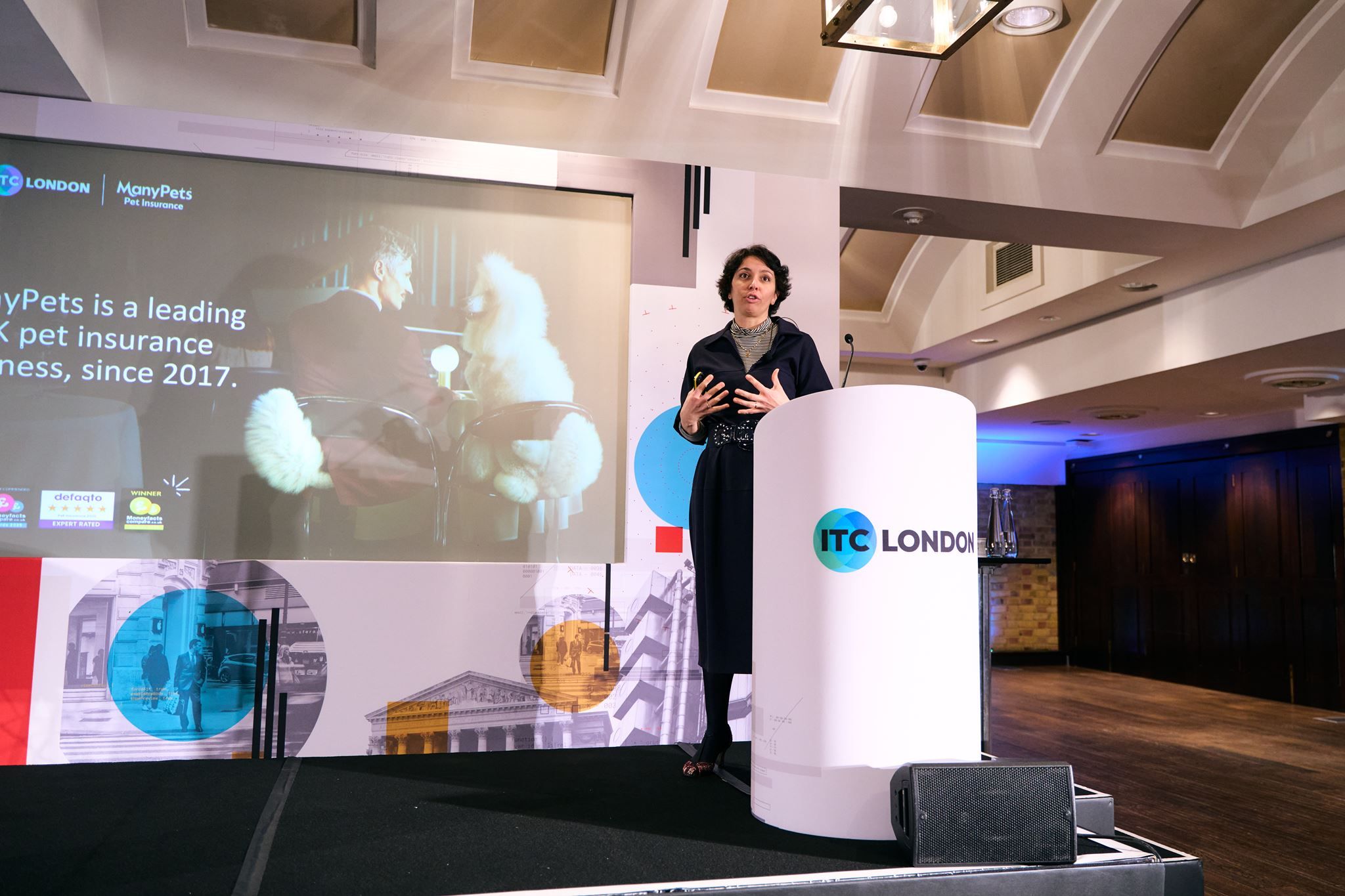
- Speakers:
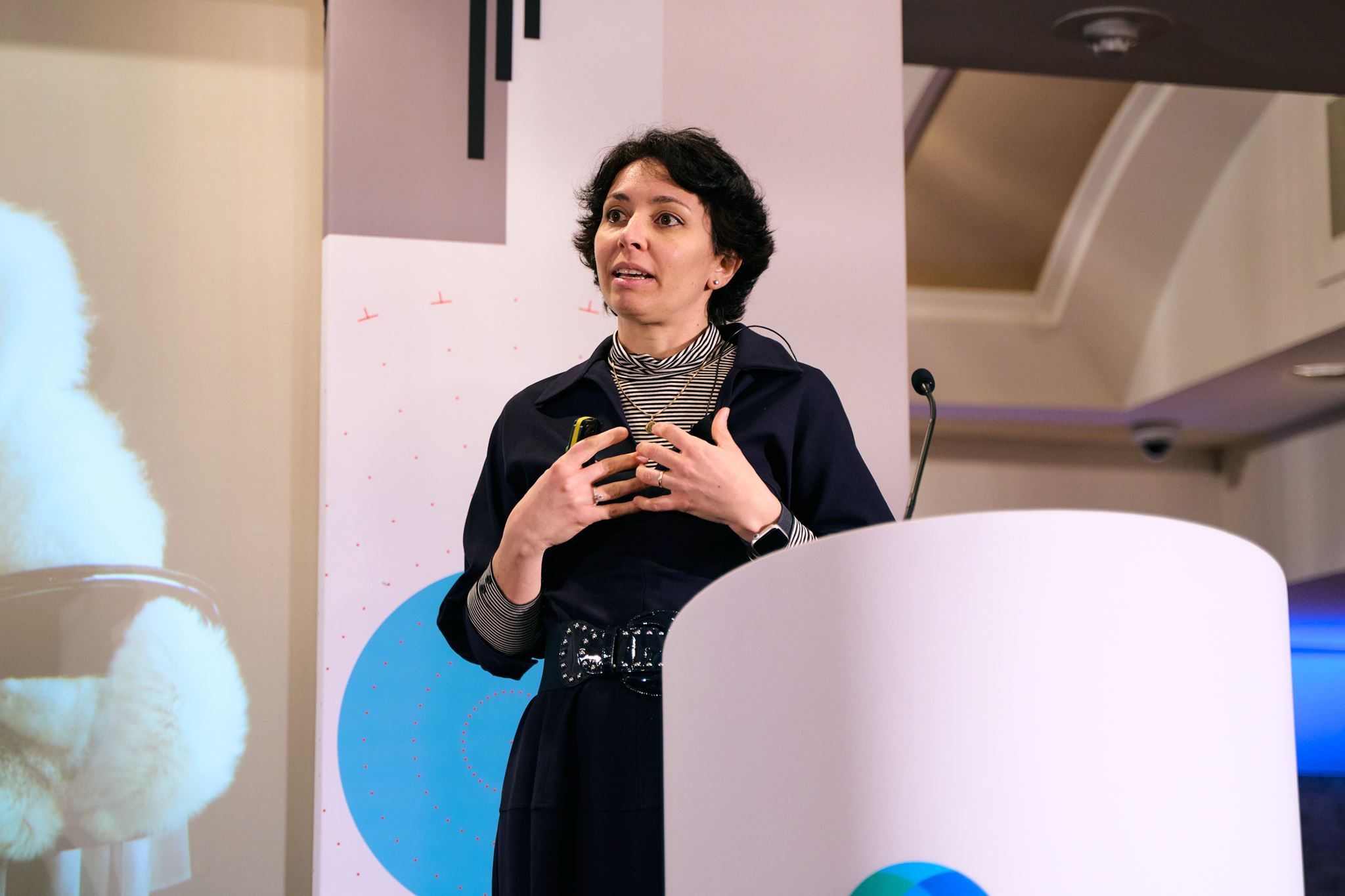
- Luisa Barile, Group Chief Executive Officer, ManyPets
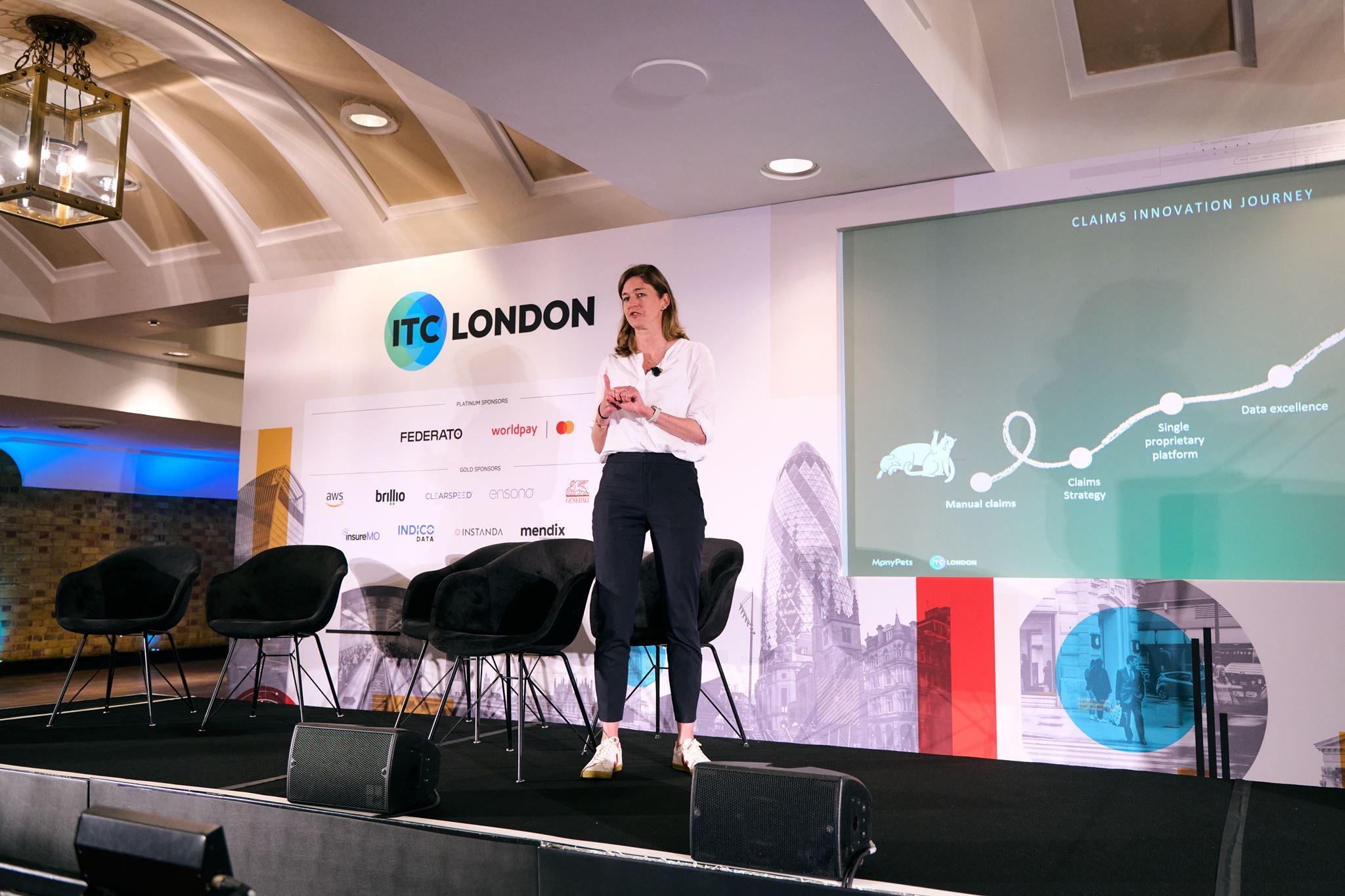
- Sophia Pilkington-Miksa, Chief Product Officer, ManyPets
- Session date: 27 January 2026
- Estimated read time: 11 minutes
Quick read summary
- ManyPets reviews 100 per cent of claims through an in-house AI agent and settles 55 per cent with no human involvement.
- Claims is where insurance customer experience is actually tested, because it is the moment the product either works or does not.
- Simple rules automate the first 30 to 40 per cent of claims, after which complexity rises sharply.
- Barile and Pilkington-Miksa argue the platform and the data have to be fixed before AI delivers anything at scale.
- Identify which claims are emotionally sensitive and route them to a human on purpose, not by accident.
Lulu, a two-year-old poodle, was not herself. Her owner Tessa submitted a claim through an online form, and within seconds it had been picked up, read and assessed. Four hours later the money was in Tessa's account.
What she did not see was the AI agent chasing a missing medical history from the vet, flagging a discrepancy between the breed on the invoice and the breed on the policy, and quietly stripping out a tick and worming treatment that pet insurance does not cover.
That claim looks like a good customer experience. It is more usefully understood as the output of nine years of infrastructure work, most of it invisible and none of it glamorous.
Why is claims where insurance customer experience is decided?
 Pet insurance is a high-frequency, high-emotion line. Customers claim often, and they claim about an animal that sleeps in their bed. ManyPets now insures 400,000 pets, so the moment arrives constantly and it matters enormously each time.
That combination makes claims the sharpest possible test of the proposition. A quote can be forgiven for being slow. A claim on a sick animal cannot.
Pilkington-Miksa was candid that ManyPets did not start from a clear position on this. Launching into pet insurance in 2017 as an eager insurtech, the company had no settled claims strategy, which made its innovation efforts reactive and piecemeal.
It poured effort into making the customer-facing claims journey slick, which was not wrong, but it under-invested in the vet claiming channel, which would have been easier for customers and produced better data for the business.
A claims strategy that optimises only the customer-facing journey will miss the channel that produces the best data.
What share of claims can actually be automated?
Every insurer running a claims automation programme eventually meets the same wall. The early wins are real, and then they stop. Barile put the ceiling precisely.
The first 30 to 40% of claims are relatively easy to automate. Very simple rules actually get you there. Beyond that point, complexity comes in very, very quickly.
The implication is uncomfortable for anyone building a business case on early results. A rules engine gets you to roughly a third and then plateaus, and the remaining volume is where both the cost and the risk sit. Getting further requires genuine model sophistication, because the objective is not simply to automate more claims but to keep paying the right ones.
ManyPets calls its agent Millie, and the numbers behind her are unusually specific for a public presentation.
Every single one of our claims, all of them, are reviewed and assessed by our AI agent, who we call Millie. 55% of them have no human involvement whatsoever from beginning to end.
Note what is being claimed and what is not. Full review coverage is total. Full automation is not, and the gap between the two figures is where the interesting engineering lives.
What does an AI claims agent actually do behind the scenes?
 Return to Lulu's claim, which the speakers chose precisely because it is not a simple one. Millie read the invoice and the medical records, extracted the conditions and outcomes into structured data, and wrote that data into the warehouse. She then checked it against the policy.
Two problems surfaced. The medical history was missing, so an email went to the vet automatically. While that was outstanding, the breed recorded by the vet did not match the breed on Tessa's policy.
That second issue went to a human. The handler received the discrepancy already packaged with everything needed to judge it, resolved it in roughly 43 seconds and handed the claim back. Millie then completed the policy checks, confirmed the condition was not pre-existing, spotted the tick and worming treatment on the invoice and removed it before payment.
The removal is the part worth dwelling on. Straight-through claims processing that pays quickly but pays for uncovered items is not an efficiency gain, it is leakage with a shorter cycle time.
Speed of settlement and accuracy of settlement are the same engineering problem, not a trade-off between two.
Which models does this work actually require?
 The single-agent framing is a simplification, and Pilkington-Miksa said so plainly. Millie, she told the room, is an incredibly twee name for what is actually five families of specialised proprietary AI models developed and trained in house.
The five do distinct jobs. Duplicate detection matters disproportionately in a high-frequency line, where vets and customers both submit, and the same claim arrives twice through simple error more often than through fraud. A pre-existing conditions model absorbs what is otherwise a slow manual read of medical records.
A fraud model runs its own checks. Image recognition neural networks scan invoices, extract structured data and drive the deductions. A leakage prediction model holds the balance between automating more and protecting the loss ratio.
Used together, these models answer one question on every claim: can this be paid safely, and if not, what happens next? For anyone scoping a similar programme, the lesson is that the orchestration between models is the hard part, not the individual models.
Where should automation deliberately stop?
The instinct in most automation programmes is to push the percentage up. ManyPets has carved out exceptions on purpose.
In a pet passing away situation, that would be an example where Millie will be passing the case to a human handler, because that is a lower administrative, higher emotional engagement moment.
The reasoning is that some claims carry very little administrative burden and a great deal of emotional weight, which inverts the usual automation logic. Handing those to a person is not a failure of the system, it is a designed output of it.
The same care extends to the handler. When a claim is passed across, Millie's working is made visible and the suggested next action is surfaced, which is why the breed discrepancy took 43 seconds rather than half an hour. On any given claim she is doing one of three things: making a decision, making a suggestion, or taking an administrative action. Everything she absorbs is time a human can spend on the customer instead.
What had to be built before any of this worked?
Three foundations, according to Barile, and all three predate the AI work.
The first is a single proprietary platform across the whole business, which is emphatically not where ManyPets started. Policies and claims were originally administered on fragmented third-party technology, which blocked end-to-end journey redesign and left the underlying data equally fragmented. The second is a single data warehouse holding a decade of granular detail on pets, customers, conditions, treatments, outcomes and behaviours, enhanced with external data.
The third is the ability to train and deploy models quickly. ManyPets builds in house where it has unique data and experience, and fine-tunes external models elsewhere, using foundational LLMs and coding agents off the shelf where it has no particular edge. Owning the platform lets it push new models into shadow mode, watch how they behave against live traffic, then promote them into production workflows.
Barile was direct that this took considerable time even for a company born digital.
Our advantage is really not just based on AI. It's a combination of the infrastructure, the data and the people that allows us to deploy intelligence in a responsible way and at scale.
For an incumbent carrier on legacy administration systems, that is a sobering benchmark rather than a reassuring one.
How should an insurer sequence a claims automation programme?
Drawn from the sequence ManyPets described, in the order the speakers said it needed to happen.
- Write the claims strategy before the technology strategy. Without one, improvement work becomes reactive and piecemeal, and the channels that matter most get missed.
- Audit your claiming channels, not just your claims journey. Third-party channels such as vets often produce better data and less customer effort than the direct route.
- Consolidate the administration platform. Fragmented third-party systems block end-to-end redesign and fragment the data underneath.
- Consolidate the data into one accessible warehouse. Granularity across conditions, treatments, outcomes and behaviours is what makes proprietary models possible.
- Decide build against buy by where your data is genuinely unique. Train in house where you have distinctive data. Fine-tune or adopt externally where you do not.
- Deploy into shadow mode before production. Observe against live volume, improve, then promote.
- Name your emotional exceptions in advance. Decide which claim types route to a human by design, and instrument the handoff so the handler inherits the working.
What this means for claims and operations leaders
- Before approving a claims AI business case, ask what percentage of claims the model set can handle beyond the rules-based 30 to 40 per cent, because that is where the return actually sits.
- If policy administration still runs on fragmented third-party systems, sequence platform consolidation first. Model work will not scale on top of fragmented data.
- Set a loss ratio guardrail alongside the automation rate target, and require both to be reported together.
- Identify the two or three claim types in your book that carry high emotional weight and low administrative burden, and route them to a named human team.
- Ask whether your handoff design gives handlers the system's working, or whether it hands them a raw file and a question.
FAQ
- What is straight-through claims processing? Straight-through claims processing describes a claim that moves from submission to payment with no manual intervention. The system classifies the claim, extracts the data, validates cover, runs its checks and issues payment automatically. ManyPets reports 55 per cent of its claims settling this way.
- How much of the claims process can insurers automate? Speaking at ITC London 2026, ManyPets Group Chief Executive Luisa Barile put the rules-based ceiling at roughly 30 to 40 per cent of claims. Automating beyond that point requires trained models rather than simple logic, because complexity increases sharply. ManyPets reaches 55 per cent zero-touch and reviews 100 per cent of claims through its agent.
- Why does claims automation depend on data and platform work first? Fragmented third-party administration systems prevent end-to-end journey redesign and leave the underlying data fragmented as well. Without consolidated, granular data, proprietary models cannot be trained. ManyPets spent years on both before deploying models at scale.
- Why did ManyPets build its claims models in house rather than buying them? Barile described a simple test: build where the data and experience are genuinely unique, fine-tune or adopt externally where they are not. ManyPets uses foundational LLMs and coding agents off the shelf, and reserves in-house training for the five model families that depend on its own decade of pet claims data.
- What did Pilkington-Miksa recommend for emotionally sensitive claims? Route them to a human deliberately. She gave the example of a pet passing away, which carries low administrative burden and high emotional engagement, and is therefore handled by a person rather than by the agent.
Conclusion
The headline number from this session is 55 per cent, but the more instructive number is 43 seconds. That was the time a human needed to resolve the one thing the machine could not, because the machine handed over its complete working rather than a raw file.
Automation at scale is not the removal of people from the process, it is the redesign of what remains for them. The detail that proves it is not the four-hour settlement, it is the tick and worming treatment that came off the invoice before the payment went out. To follow the sessions and speakers shaping the London Market, register your interest in ITC London 2027, or get in touch about partnership opportunities.
About our speakers
Luisa Barile
Group Chief Executive Officer, ManyPets
An actuary by training, Barile joined ManyPets before its rebrand from Bought By Many and served as Chief Financial Officer and then UK Chief Executive before taking the group role in 2024. She led the funding work behind the company's UK and US expansion, which gives her an unusually direct view of what infrastructure investment does and does not return.
Sophia Pilkington-Miksa
Chief Product Officer, ManyPets
Pilkington-Miksa leads product at ManyPets and has overseen the shift from third-party platforms to in-house technology and the data maturity work that followed. She speaks about claims automation from a build position rather than a buy position, which is rare among practitioners presenting on AI in claims.
Further reading
- Keynote: Innovation in Claims & Customer Centricity (session page)
- Why insurance digital transformation fails before it starts
- Insurers and reinsurers at ITC London
- Insurtechs at ITC London
- Attend ITC London 2027
Based on a session delivered at ITC London 2026. Edited from the original transcript for clarity, structure and long-term reader value.
The next edition of ITC London is here. Registration for ITC London 2027 is now open. Secure your place, connect with the people shaping the industry, and be part of the conversation this time.